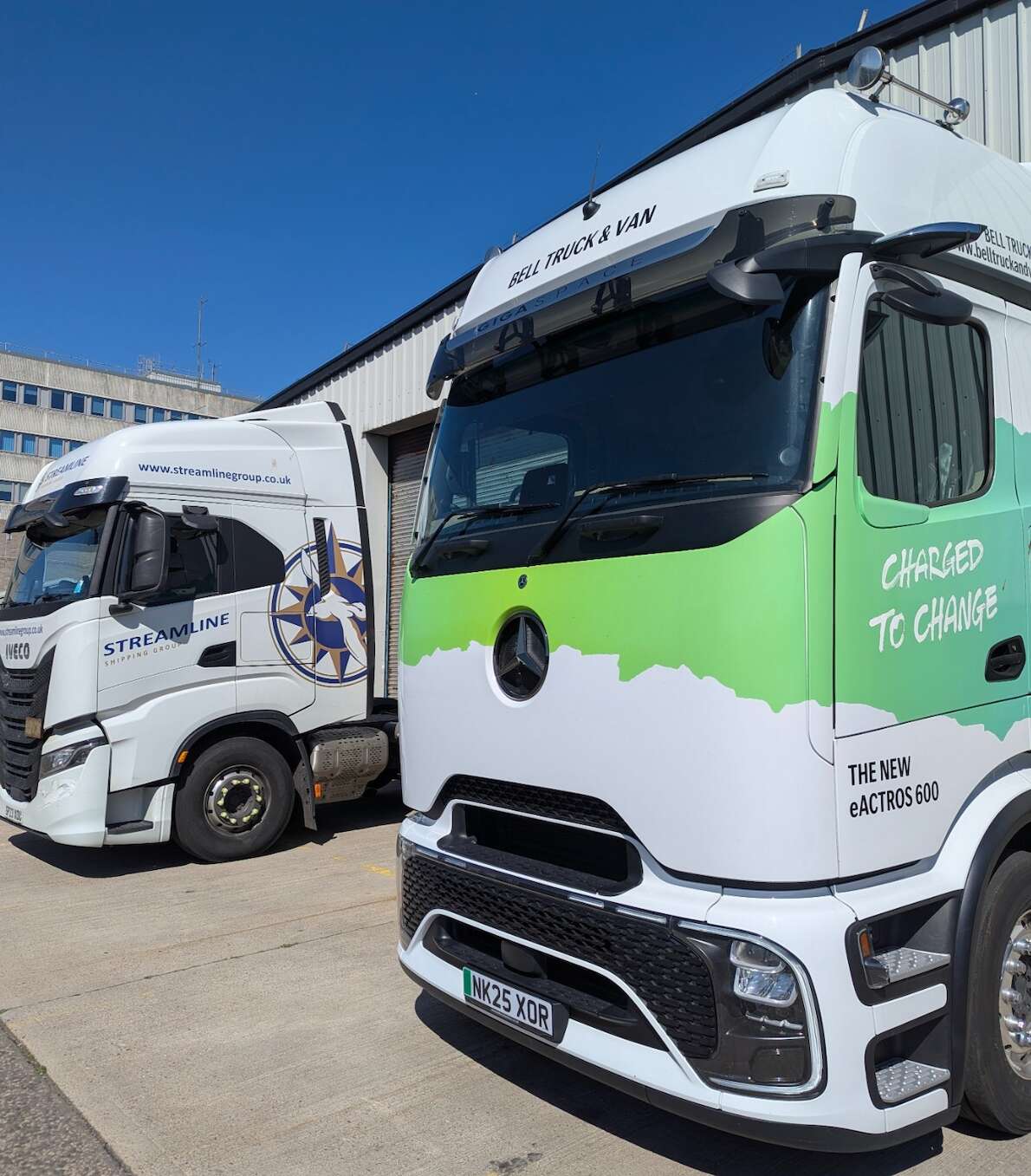
Streamline Shipping Group has recently completed a short-term trial of an electric artic unit across its Aberdeen terminal and port operations as part of its ongoing evaluation of lower-emission and future-ready fleet technologies.
The vehicle was tested in real working conditions, including day-to-day freight movements, terminal activity and regional logistics operations.
Drivers noted that the vehicle was well equipped, with strong onboard technology and a relatively fast charging capability, although some operational quirks were also identified, reflecting the practical challenges currently facing electric freight transport within logistics.
One of the main considerations during the trial was payload capacity: due to the additional weight of the battery system, the vehicle’s cargo payload was reduced by approximately 4,000kg compared to a conventional arctic unit.
For freight operators moving high volumes daily, this reduction has a significant impact on efficiency, with fewer goods transported per journey and more vehicles potentially required to move the same volume of freight.
The trial also highlighted ongoing challenges around vehicle range and charging infrastructure. Although the arctic unit could recharge in approximately two hours at a suitable supercharge facility, the distances between Streamline’s operational bases would likely require charging at most stops rather than once or twice per day. In practical terms, this creates operational downtime that impacts delivery efficiency and time spent on the road.
Despite the challenges identified, the trial provided valuable insight into how electric arctic unit technology could fit into future logistics operations as infrastructure and vehicle capability continue to evolve. As the sector evolves, Streamline continues to monitor developments in alternative fuel and low-emission transport solutions while ensuring operational reliability remains a priority for customers across Scotland and beyond.